
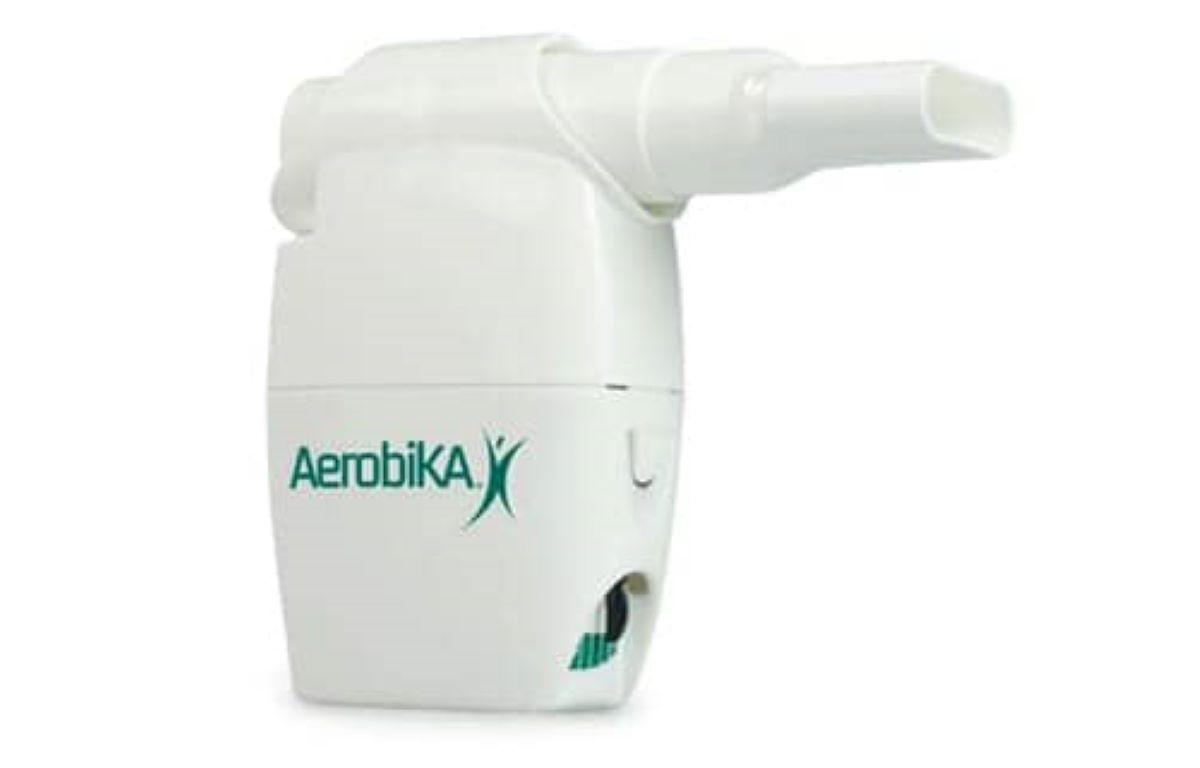
This guide walks through practical, patient-friendly steps. They should still follow their clinician’s instructions if those differ.
What is the Aerobika device used for?
It’s used to help move mucus out of the lungs for people who have trouble clearing secretions. Clinicians often recommend it for conditions where mucus can build up, such as chronic bronchitis, bronchiectasis, COPD, or after certain respiratory infections.
If you’re searching for aerobika device how to use, the Aerobika works by creating gentle vibrations in the airways when you breathe out, helping loosen mucus so it can be coughed out more easily.
It is not a rescue inhaler and does not replace prescribed medicines. It is a technique tool that works best when used consistently.
What should they prepare before using Aerobika?
They should start by gathering the device, a clean surface, and tissues or a sputum cup. If they use inhaled medications, they should confirm the right order with their clinician since some people are told to use Aerobika after a bronchodilator.
They should wash their hands and inspect the device for cracks, buildup, or missing parts. If it looks damaged, they should not use it.
How do they assemble the Aerobika device?
They should ensure the mouthpiece is firmly attached and that the device is clicked together as designed. If their model has a dial or adjustable resistance, they should set it to the level recommended by their clinician or start at a lower setting if they were told to build up gradually.
They should avoid forcing parts together. If the fit seems off, they should re-check alignment rather than pushing harder.
What body position should they use?
They should sit upright in a supportive chair with feet flat on the floor. Good posture matters because it gives the lungs room to expand and makes the exhale technique more effective.
If they were taught a specific airway clearance position (like certain drainage positions), they should use the position their clinician recommended.
How do they breathe with Aerobika step by step?
They should follow this simple cycle and keep the breathing controlled rather than forceful:
- Seal the mouthpiece: They should place lips tightly around the mouthpiece to prevent leaks.
- Inhale slightly deeper than normal: They can inhale through the mouthpiece (or inhale normally if instructed), filling the lungs comfortably.
- Hold for 2–3 seconds: This helps air get behind mucus.
- Exhale actively through the device: They should breathe out for about 3–4 seconds, keeping cheeks firm, feeling resistance and gentle vibrations.
- Repeat for 10–20 breaths: They should maintain a steady rhythm and avoid rushing.
They should stop if they feel lightheaded and resume more slowly once they feel normal.
When should they cough or do “huff coughs”?
They should cough only when mucus feels ready to move, not after every single breath. A common approach is to do a set of breaths (often 10–20), then clear mucus.
If they were taught a huff cough, they can use it like this: take a medium breath in, then force air out with an open mouth as if fogging a mirror. One or two huffs followed by a cough often clears mucus with less strain than repeated hard coughing.
How long should a session take and how often should they use it?
Many people complete a session in about 10–20 minutes, but the exact time and frequency should match their care plan. Some are instructed to do it once or twice daily, while others increase frequency during flare-ups.
They should not assume “more is always better.” Overdoing it can lead to fatigue, irritation, or dizziness, especially early on.
How do they know the resistance setting is correct?
They should feel resistance and vibration during the exhale, without needing to strain. If they cannot exhale for a steady 3–4 seconds, the setting may be too high, or they may be blowing too hard.
If they feel almost no vibration or resistance, the setting may be too low, the seal may be poor, or the device may need cleaning. They should only change settings if their clinician said it is appropriate.
What common mistakes should they avoid?
They should avoid blowing too hard, puffing cheeks, or taking rapid shallow breaths, since that can reduce effectiveness. They should also avoid lying slouched or using the device while distracted, because technique quality drops quickly.
They should not share the device. They should also avoid using it if it is visibly dirty, still wet inside after cleaning, or assembled incorrectly.
How should they clean and dry the Aerobika device?
They should clean it as often as their instructions recommend, commonly after each day of use. A safe general routine is:
- Disassemble the parts as directed.
- Wash with warm water and mild dish soap.
- Rinse thoroughly to remove soap residue.
- Air-dry completely on a clean towel.
They should avoid reassembling while damp, since moisture can encourage buildup. If their clinician provided sterilizing instructions (boiling, disinfecting solution, or dishwasher guidance), they should follow that exact method for their model.

When should they stop and contact a clinician?
They should stop using the device and seek advice if they have chest pain, significant shortness of breath, coughing up blood, worsening wheeze, or dizziness that does not quickly resolve. They should also contact their clinician if mucus changes markedly in color, volume, or smell, or if they develop fever or worsening fatigue.
If they are unsure the technique is working, they can ask for a supervised refresher. A small tweak in posture, resistance, or breathing pace often makes a big difference.
More to Read : Aerobika Device How to Use: Step-by-Step Guide for Patients
FAQs (Frequently Asked Questions)
What is the Aerobika device and how does it help with airway clearance?
The Aerobika device is a simple, handheld tool designed to help loosen mucus and make coughing more productive. It supports airway clearance by combining breathing out against resistance with gentle airway vibrations, aiding in moving mucus out of the lungs for people who have difficulty clearing secretions.
Who should use the Aerobika device and for which conditions is it recommended?
Clinicians often recommend the Aerobika device for individuals with conditions where mucus can build up, such as chronic bronchitis, bronchiectasis, COPD, or after certain respiratory infections. It is not a rescue inhaler and does not replace prescribed medicines but serves as a technique tool to aid mucus clearance when used consistently.
How do I properly prepare and assemble the Aerobika device before use?
Before using the Aerobika device, gather the device, a clean surface, tissues or a sputum cup, and wash your hands. Inspect the device for cracks or damage and do not use if damaged. Assemble by firmly attaching the mouthpiece and clicking parts together as designed. If your model has adjustable resistance, set it according to your clinician’s recommendation or start low if advised.
What is the correct breathing technique when using the Aerobika device?
Seal your lips tightly around the mouthpiece to prevent leaks. Inhale slightly deeper than normal through the mouthpiece (or normally if instructed), hold your breath for 2–3 seconds to allow air behind mucus, then exhale actively through the device for about 3–4 seconds while keeping cheeks firm to feel resistance and gentle vibrations. Repeat this cycle steadily for 10–20 breaths without rushing.
When should I cough or perform huff coughs during an Aerobika session?
Cough only when mucus feels ready to move, typically after completing a set of 10–20 breaths. If taught huff coughing, take a medium breath in then force air out with an open mouth as if fogging a mirror; one or two huffs followed by a cough can clear mucus effectively with less strain than repeated hard coughing.
How should I clean and maintain my Aerobika device for safe use?
Clean the Aerobika device regularly, commonly after each day of use. Disassemble parts as directed, wash with warm water and mild dish soap, rinse thoroughly to remove soap residue, and air-dry completely on a clean towel before reassembling. Avoid using it while damp to prevent buildup. Follow any specific sterilizing instructions provided by your clinician or manufacturer.